What is The Masters Class For?

In King of Clubs, Masters was created as a second 17.5 Blinky Touring Car class for drivers aged 50 and over. A championship for racers who needed a bit of extra time to get on to the rostrum, had the odd brain fart in the chicane and, in many cases, owned setup boards older than the Talent Cup grid.
The idea was simple enough. Give older drivers their own contest. Not a soft class. Not a sympathy class. Just a place where drivers of a certain age could compete against each other while creating a more chilled out vibe and a few extra trophies to be won. And that is exactly what it did.
Then we realised Jay Westwood was 50.
Which, frankly, feels like poor planning by everyone involved. Because Jay is not drifting gently into a comfortable racing retirement. He is properly, annoyingly, brilliantly fast. Maybe faster than ever.
At Aldershot, in KOC26 Round 2, Jay’s best qualifying run in Masters was 21 laps in 5:12.295. Circuit record pace. In the big show, his brother Glenn (also eligible for Masters, they are twins if you haven’t noticed) set a new track record with 21 laps in 5:09.040.
Awkwardly for the Masters class, Jay was miles clear of the rest of the Masters field. His nearest rival, last year's vice champion Dave Ringsell, posted 20 laps in 5:13.974. Jay was more than a lap ahead.
Meanwhile, Glenn was in a bloody dog fight. Ben Cane finished just half a second behind him on 21 laps in 5:09.590 and would go on to win. That was a fight where every tenth of a second meant everything.
Jay’s Masters time would have put him third in that qualifying round, just behind Glenn and Ben. But that is before you get to the most irritating possibility of all: he probably could have gone faster if he really needed to.
So the question is obvious.
If the fastest Masters driver is also a contender in Big Show, what exactly is Masters for?

The easy answer is also the wrong one
The easy answer is to say Jay should be in Stock. That feels tempting. It is clean and emotionally satisfying.
But it is also wrong. The class is for drivers aged 50 and over. Jay is 50. End of argument. You cannot create an age-based class and then complain when someone of that age turns up and is fast.
The real question is whether Masters is meant to be an age category or a performance category, because they clearly aren't the same thing.
If Masters is an age category, then Jay belongs there. So does Dave, Damo and every other driver over 50, whether they are fighting for the overall win or trying to remember where they put their medication.
If Masters is a performance category, then age is irrelevant. You would need licence formulas, grading or some other system that decides who is “too good” to be there.
That gets messy quickly and likely needs a much larger pool of racers competing to work cleanly.
Because once you start saying a driver is too fast for Masters, where do you draw a line and why? Is it only if they can win Stock? Is it if they can make the Stock A-final? Is it if they are within half a lap of the Stock leaders?
The uncomfortable truth about age
Fifty is not old. Not in life and not in sport. Phil Mickelson was still winning golf tournaments in his 50s. Lewis Hamilton just won the Barcelona-Catalunya Grand Prix in his 40’s and he doesn’t look like slowing down anytime soon. Plenty of drivers in their fifties are fast.
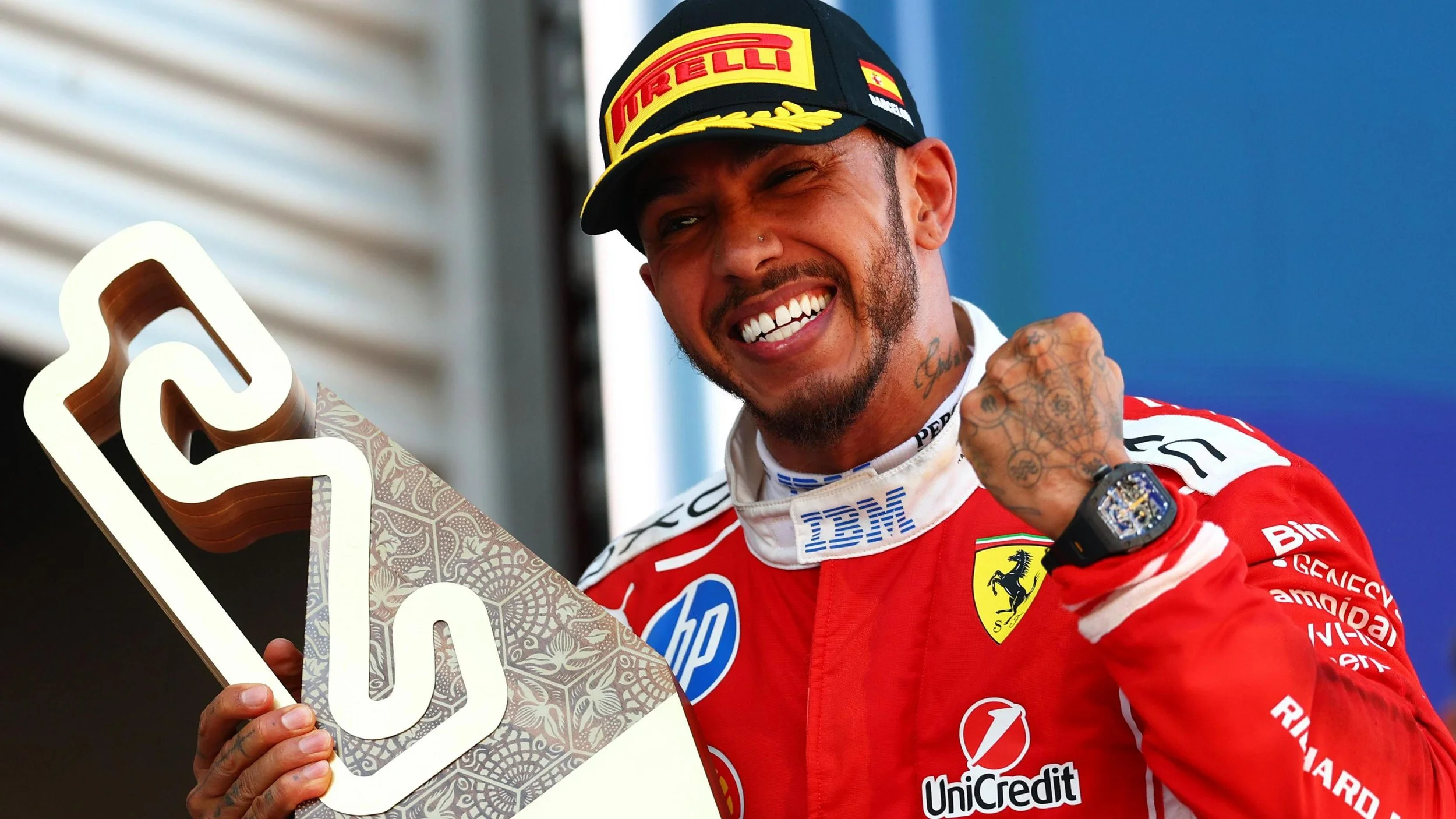
Some drivers lose a little edge with age. Some do not. Some lose eyesight. Some gain patience. Some lose the ability to stand on the rostrum without making noises. Some just keep getting better because they have thirty years of racecraft stored in their thumbs.
Another thought behind the Masters was related to the KOC emphasis on Rookies and junior drivers. Maybe a more gentile Masters class would work for parents of newcomers, new to Touring Car racing.
The BRCA Nationals have a Masters category, but it is not separated into its own class in quite the same way. Masters drivers race within the main 17.5 Blinky field, with the over-50 element recognised inside the wider championship. At the moment, Andrew Robson is the leading Masters driver in the 17.5 Blinky National Championship, sitting 14th overall.
The ETS takes a different approach. Its Masters class is separate and runs to a slower 21.5T-style format, closer in spirit to KOC’s own Talent Cup than to full-fat 17.5 Stock.
That gives Masters its own identity. It also changes the racing. Less outright speed. Less aggression in the powertrain. A slightly different feel that's maybe less appealing to the very fastest drivers. Perhaps.
Neither approach is obviously right or wrong. KOC, perhaps accidentally, sits somewhere in between.
But then there was Stock
Some say the central issue nowadays is 17.5 Blinky racing is too fast, period.
There is a decent argument for that. In fact, plenty of people already make it. Modern 17.5 Touring Cars are very fast. They are quicker now than Modified was ‘back in the day’. Maybe we need to slow it all down for everyone.
But then you watch the 17.5 Blinky A-finals at Aldershot, and suddenly the argument gets much harder.
Because they were brilliant races.
Not just fast. Breathtaking. The whole paddock stopped to watch. Proper racing. Proper race engineering. Cars on the limit, drivers leaning on each other without falling over the line, every corner carrying consequences. Nobody knew who would win. It had speed, tension, precision and pressure.
That kind of racing is exactly why people love Touring Cars.
So why would you change that? Why would you take one of the best spectacles in KOC and make it slower just because the same format may not be the right answer for every driver?
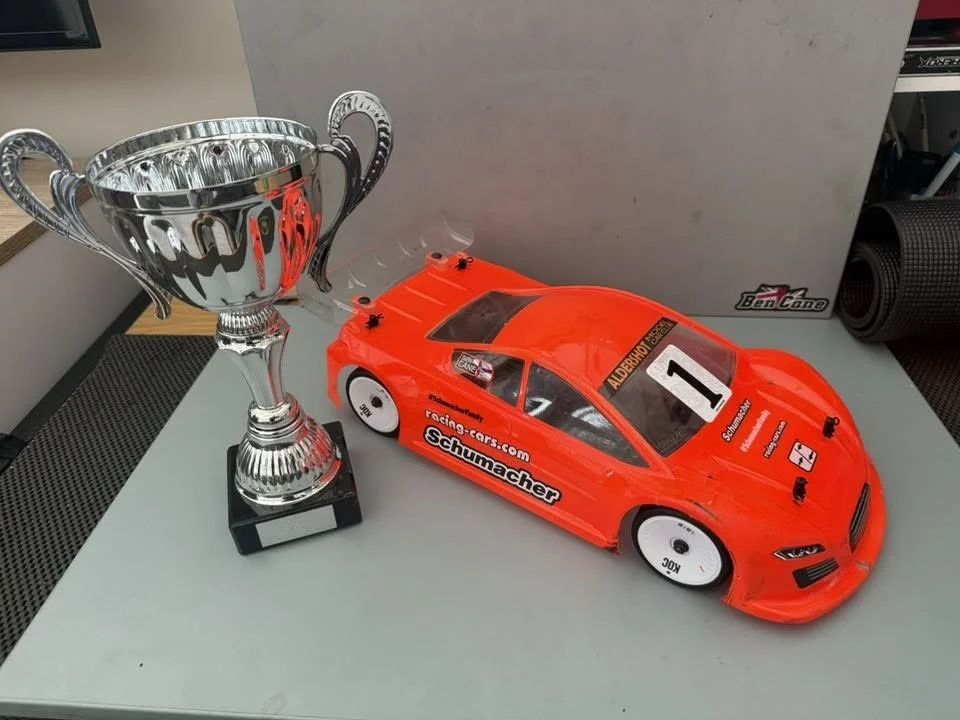
So what is Masters for?
This is where KOC needs to be honest with itself.
Masters can be one of three* things.
It can be a true age championship.
In that case, keep it exactly as it is. The best over-50 driver wins. If that driver is also fast enough to win the main stock class, so be it. That gives the class credibility. It says Masters is not a retirement home. It is a serious championship for serious racers who happen to have seen more world events than the rest of the grid.
It can be a participation class.
In that case, we probably need to slow it down, change the spec, or give it a different identity. A 21.5T, FDR limited Masters class would make sense here. It would reduce the speed, reduce the need for very latest cars and electronics, make it more accessible and potentially create a more relaxed style of racing.
And anyone who’s paid attention to the Talent Cup can see those cars ain’t exactly slow.
But some Masters drivers do not want to be politely escorted into something slower. They do not want to feel like they have been placed in the soft play area while Stock gets to carry on being spectacular.
And fair enough.
If you are 50-plus and still quick, why should the sport assume you want less?
So whats the problem?
There is only a problem if the idea of a Masters class is quietly trying to serve two completely different roles at the same time. There’s one version where a 50+ driver who could mix it at the sharp end of any class chooses the Masters as a legitimate age championship that respects what he can do. Then there’s the other version where a driver who isn’t slow, knows how to build and race a touring car, wants a meaningful championship against others of a similar pace.
Jay Westwood winning every Masters race by a lap hasn’t broken the class, far from it. He has just made it interesting to ask the question.
What’s it for?
*What was the third thing? Something about brain farts and being over 50.