How Low Can You Go?
Is stock touring car racing changing fast?
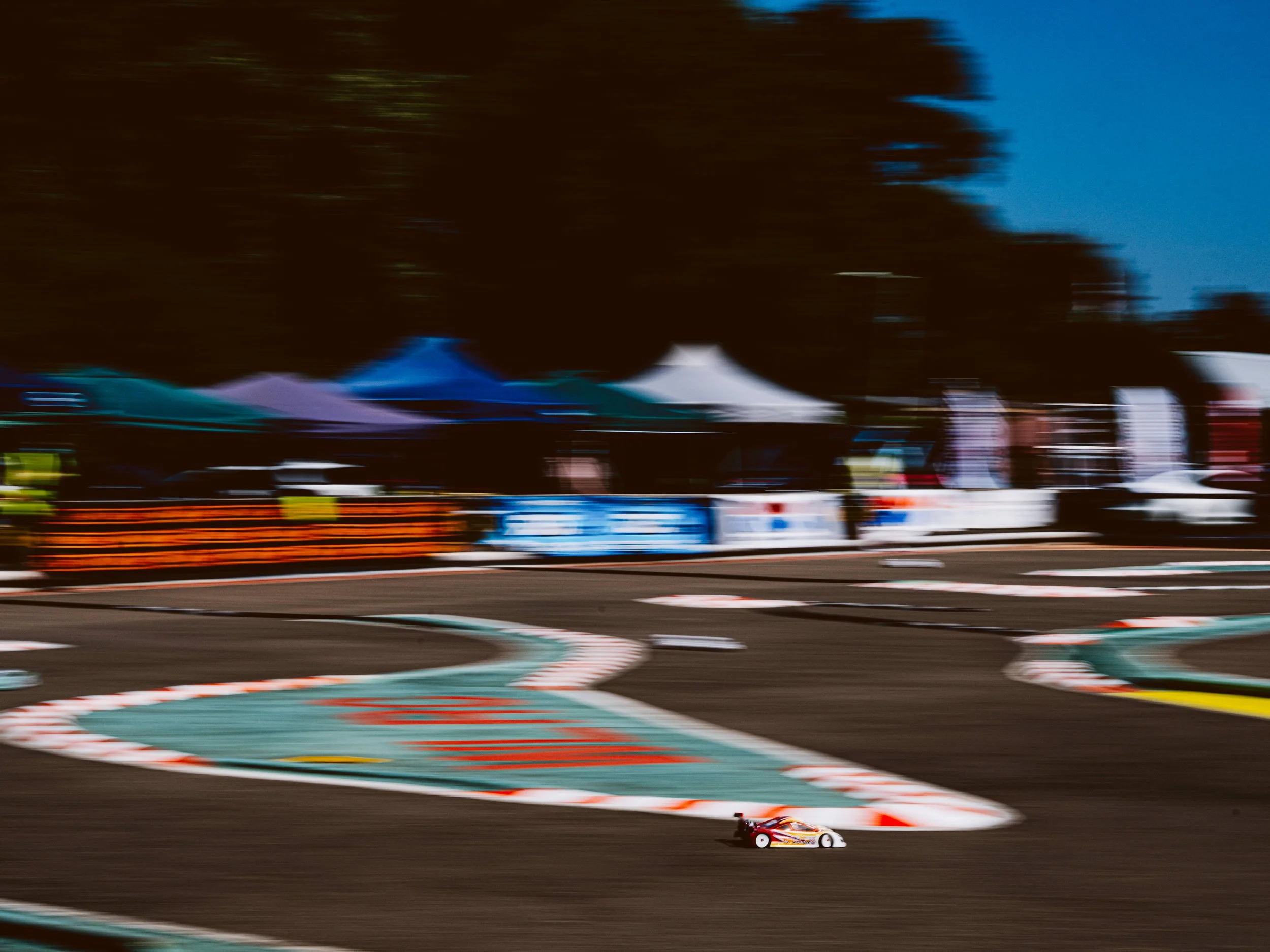
For years, stock racing was relatively easy to understand. Not easy to do, but easy to understand.
You took a spec motor, squeezed every last watt from it, and tried to build the cleanest, freest, most efficient touring car you could. The heroes of stock racing were the efficiency obsessives: the drivers and mechanics who found speed in smoother drivetrains, better batteries, lower friction, freer bearings, cleaner corner speed and setup changes that let the car carry momentum rather than fight the track. Drivers would cut every other tooth off a drive belt!
In many ways, stock racing was a battle against limitations. The motor only had so much power. The batteries only held so much energy. The challenge was not simply making the car fast, but making it fast enough for long enough. Veterans will remember when battery management was a critical part of the equation. A setup that was blisteringly quick for three minutes was worthless if the battery fell on its face before the final lap. The fastest racers were often those who could make a limited package perform at its best from the first corner to the last.
The challenge was simple enough to describe, even if it was hard to master: extract more from less.
Recently, though, something has shifted.
At first it was almost invisible, the sort of thing discussed quietly in the pits between heats. A slightly bigger pinion here. A bit more punch there. Then the FDR numbers started falling fast. What used to be 4.2 became 3.8. Then 3.6. Then 3.4.
At KOC last weekend racers were talking about 3.2 and below. Suddenly the question is how far this thing is going to go.
The Rules Haven't Changed. The Game Might Have.
What makes the shift so interesting is that the rulebook has not changed for some time. KOC Stock Touring Car, like BRCA stock racing more broadly, remains a 17.5 blinky class. The format is familiar. The cars look familiar. The racing still looks, from the outside, like stock racing.
But anyone spending time around the pits knows something feels different.
The latest generation of motors such as the Hobbywing G5 and Zombie Evo III are producing more and more usable torque, greater efficiency and stronger performance than previous generations. Nobody is suggesting that stock motors have suddenly become modified motors. That would be nonsense. But they may now have enough usable performance to change the questions racers are asking.
For years, stock racers asked: how do I find more power?
Increasingly, they seem to be asking: how do I use all the available power?
That is a subtle shift, but it matters.
Historically, modified racing has lived in a world of abundance. An excess of power. The challenge is controlling it, putting it down and making it usable over five minutes. On the other hand, stock racing has lived in a different world. A class defined by scarcity, where every gain had to be earned and every tenth had to be discovered.
If modern 17.5 motors are beginning to provide more torque than racers previously expected, the response is obvious. Gear the car taller. Let the motor pull. Trade some punch for more speed and efficiency. Find out where the limit really is.
That is exactly what appears to be happening.
The Great Gearing Arms Race
The funny thing about gearing trends is that they move from ridiculous to normal remarkably quickly.
Somebody arrives with a ratio that sounds optimistic. People mutter that it will never pull it, or that it will overheat, or that it might be quick for a lap but not over a run. Then the car is fast. The temperatures are fine. The lap times hold. By the next meeting MB Models had sold out of dinner plate size pinions.
That is how the new normal gets created.
The danger, of course, is that the number becomes the story. Lower gearing sounds brave. It looks clever written on a setup sheet. It gives racers something simple to chase.
But the stopwatch has a habit of humiliating simple theories.
The fastest final drive ratio is not automatically the lowest one. It is the lowest ratio the entire package can support.
That package includes the motor, ESC, timing, battery, drivetrain, bearings, tyres, track grip, ambient temperature, body shell and driving style. Miss one part of the equation and a heroic gear ratio can quickly become a hot, lazy, inconsistent car that looks impressive at first and disappointing for the next four and a half minutes.
The best stock cars do not simply pull tall gearing. They carry it cleanly. They preserve momentum, minimise scrub and avoid asking the motor to rescue poor driving.
In that sense, the gearing trend may actually be making stock racing more technical rather than less. A longer-geared car rewards drivers who can keep momentum alive. It punishes those who over-slow the car, attack every apex and rely on acceleration to cover mistakes.
The Tyre War Comes To Stock
There is another consequence of all this, and it may prove just as important as the gearing itself.
Tyres.
For years, one of the clearest differences between stock and modified was tyre consumption. Modified racing was notoriously hard on tyres. The cars had the power to punish them, and fresh rubber could make a significant difference.
Stock was a bit more forgiving.
Tyres always mattered, of course, but a good driver on second-run tyres could still be in the fight. The gap between new and used rubber existed, but it was not always decisive.
That may be changing.
As stock cars become faster, more heavily geared and more capable of carrying speed, the loads going through the tyre inevitably increase. A modern 17.5 car may still be blinky, but if it is pulling taller gearing and arriving at the corner faster, the tyre has more work to do. It has to support the car, generate drive, hold on through the fast sections and still be there at the end of five minutes.
That changes the race.
Suddenly tyre strategy starts to creep even further into stock racing. Do you use the best set for qualifying? Do you save fresher rubber for the finals? How much performance is left in a second-run set? Can you still challenge somebody on new tyres if yours have already seen a hard day at the track?
These are not new questions in touring car racing.
But they may be becoming more important in stock than they used to be.
Which raises an intriguing possibility.
What if the limiting factor in stock racing is changing?
For decades the conversation centred on motors, batteries and efficiency. How do you make limited power last longer? How do you get more speed from less energy?
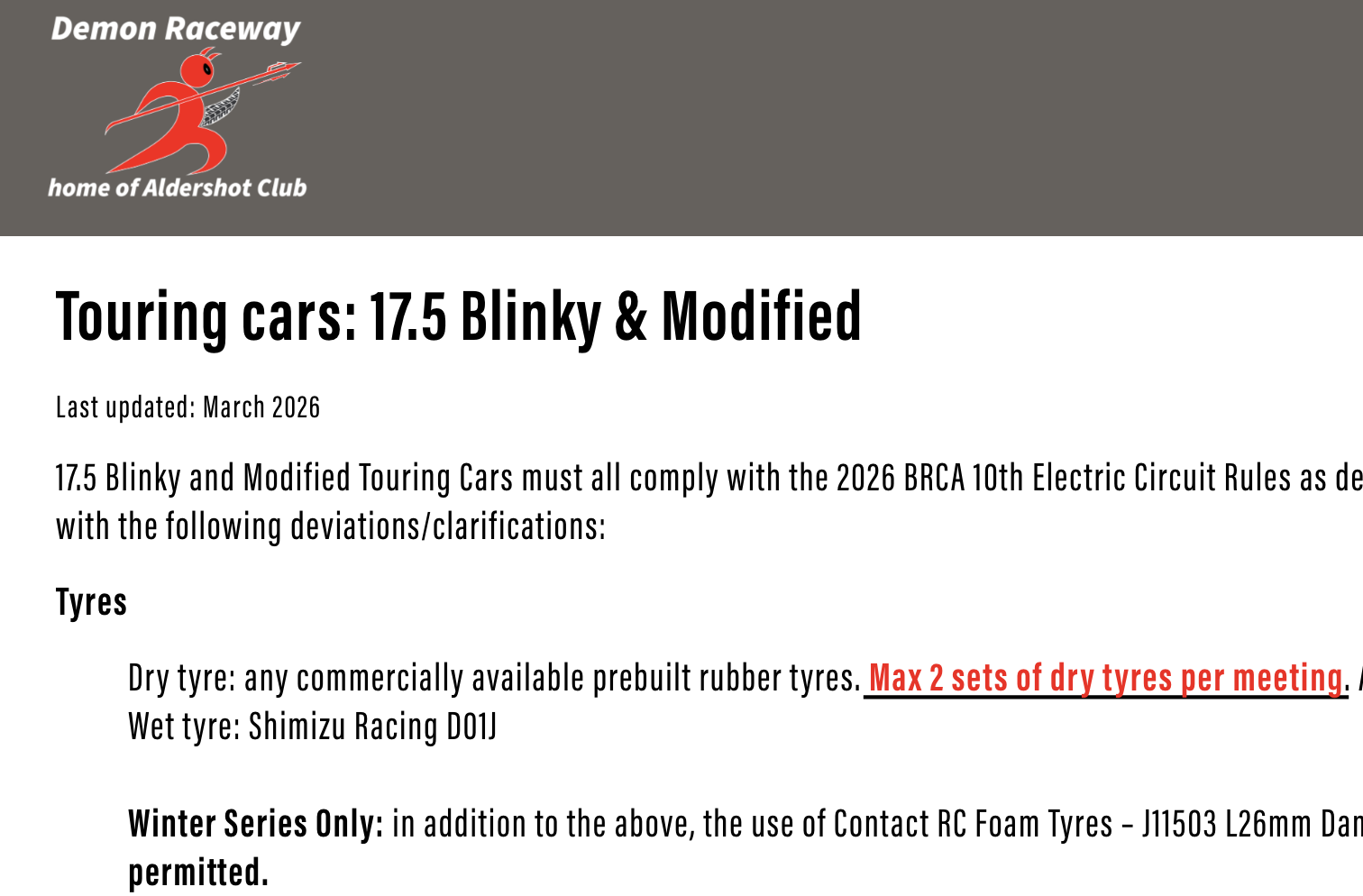
Today, the conversation increasingly feels like it is moving towards tyres. Club races, formerly the home of scrubbed tyres are now seeing new used so much some places are introducing tyre limits to club races.
Not because stock has become modified.
But because the motors may finally be getting ahead of the grip.
A New Kind Of Stock Driver?
Every class develops its own idea of what excellence looks like.
The stock racer of ten years ago was an efficiency expert. Someone who could find tiny gains and make a limited package feel faster than it had any right to be.
Those skills still matter. In fact, they may matter more than ever.
But modern stock racing may now be demanding something extra.
The best drivers will still need to be smooth, precise and mechanically sympathetic. They will still need to build cars that roll freely and carry momentum. But they may also need to think more like tyre managers and power managers, balancing outright speed against consistency across a run.
That is a different challenge.
It does not make stock less pure. If anything, it makes it more interesting.
So How Low Can You Go?
The honest answer is that nobody really knows.
Not yet.
Keywords:
17.5 stock touring car, stock touring car gearing, touring car gearing ratios, RC touring car setup, BRCA stock touring car, stock motor gearing, Hobbywing stock motor, Zombie stock motor, RC racing setup, touring car tyres, tyre management, electric touring car, RC touring car racing, blinky stock racing, 17.5 blinky, final drive ratio, FDR, RC car gearing, stock class racing, touring car setup guide, RC setup tips, BRCA touring car racing, King of Clubs, KOC Race Series, electric RC racing, competitive RC racing, touring car motors, Hobbywing G5 Torque, Zombie Evo III, stock racing technology, RC motorsport, radio control racing, UK RC racing, touring car performance, RC car tuning, stock racing strategy, touring car tyre strategy, RC racing blog, model car racing, RC touring car championship