The Vortex Is Here. Touring Cars Are Dead.
They Don’t Look Like Touring Cars Anymore
This is not really about a bodyshell.
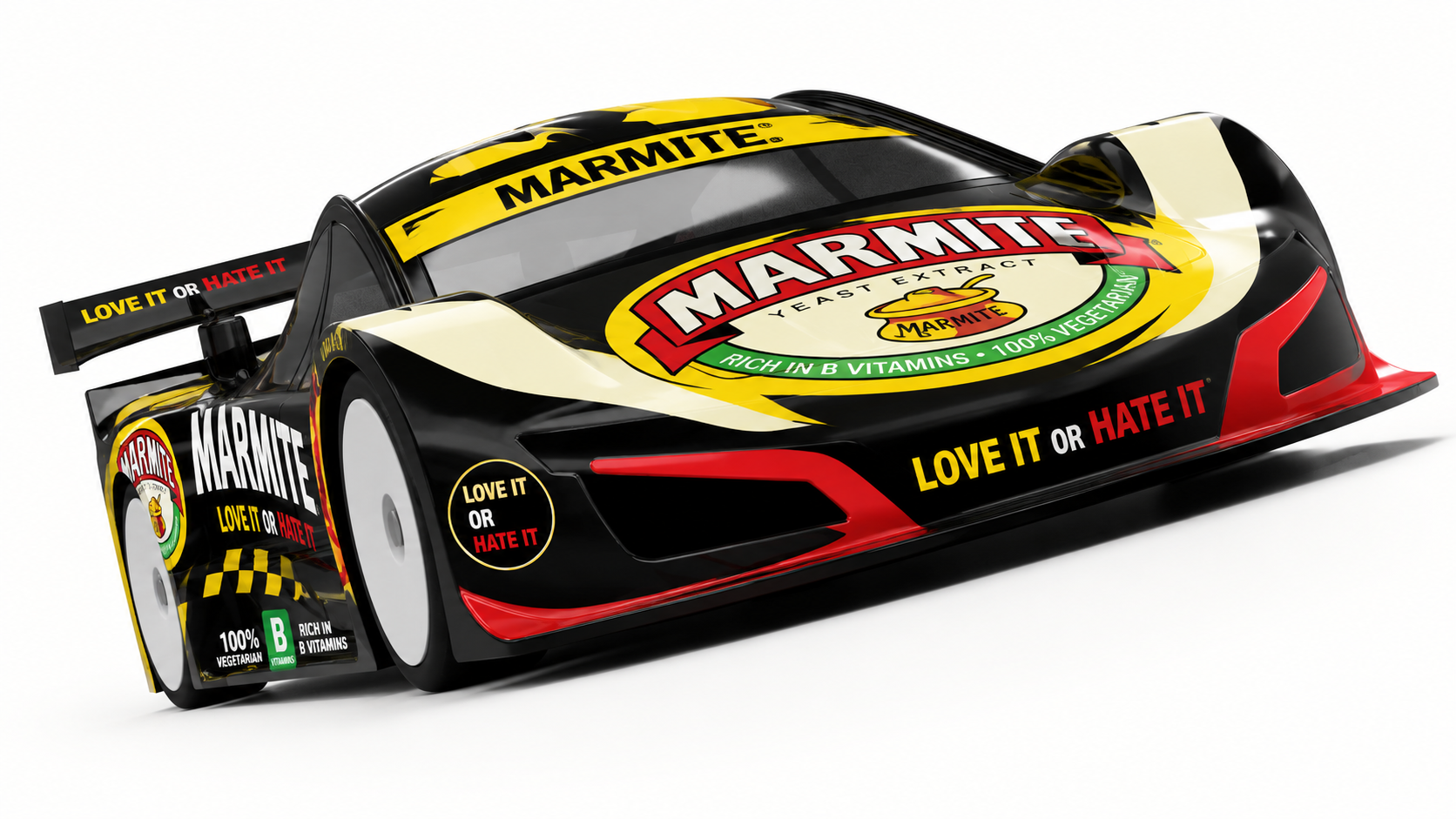
The Avalon Vortex is now approved and legal for BRCA touring cars, generating exactly the kind of chatter touring car racing is very good at generating: technical, emotional, funny, slightly exhausting, and absolutely not about the thing everyone claims it is about.
The more polite comments are asking if it looks like a real car? Does it look like a touring car? Has the class lost something important by moving so far away from scale replicas of ’90s saloon cars?
Those are fair questions. Touring car racing, at least in spirit, began with cars that looked like cars. That was part of the appeal. You could squint at a grid of 1/10 scale machines and see a tiny echo of the BTCC, DTM, Super Touring and so on. Door lines. Roof shapes. Bonnet lines.
Now look at a modern high-performance touring car shell like the Vortex.
There are still four wheel arches and something that could be called a cabin. But much of the visual language has changed. The shape is no longer trying very hard to resemble something you might find in a supermarket car park. It is chasing air. It is chasing rotation. It is chasing rear stability, corner speed, consistency and that magical moment when the car points at the apex and simply goes there.
To some, that looks like progress.
To others, it’s the death of touring cars.
And that is the real problem.
Not whether one shell is pretty or ugly. Not whether the Vortex is a step too far, a clever leap forward, or simply the latest thing we are all going to complain about before quietly buying one and trying it.
It is about identity.
Could RC racing ever be an Olympic sport?
Probably not any time soon.
But asking the question is useful, because it exposes something more important: whether RC racing wants to be a hobby, a sport, or a motorsport discipline in its own right.
That is where things get a bit uncomfortable, because the outside world already has its own answer.
The world sees toy cars.
We call them toy cars ourselves. Usually with a grin, a shrug, and a bit of self-deprecating humour. It is part defence mechanism, part community code, part truth. These are small cars. They sit on folding tables. They are fixed with tiny screws. We geek out on shiny miniature tools. Some of us collect them and put them on shelves.
So yes, that sounds like toy cars.
But here is the awkward bit. We want the warmth and humour of the hobby. We want the charm of club race night and the “let’s just have a good time racing toy cars” spirit.
But we also want councils, sponsors, schools, media, governing bodies, funders, parents and young people to see what we really are: a serious technical sport full of skill, discipline, engineering, pressure and competition.
Check out the decisive A Final of KOC26 RD2 at Aldershot — a five-minute touring car race where literally no one was “playing with cars”. It was speed, judgement, setup, tyre management, hand-eye coordination, mechanical sympathy, emotional control and racecraft. We all stopped to watch, wished we were that good and applauded at the end.
These racers do not play. They adjust tyre warmers based on the temperature of the asphalt. They spend days away from friends and family testing small adjustments to the roll centre. They worry about their rival running a steel chassis while they are on carbon. They buy books, read blogs and think all week about how to go faster.
That is sport.
But We Don’t Get Gold Medals
Which brings us back to the Olympics.
Not because RC touring car racing is about to roll into Los Angeles or Brisbane with LiPo bags designed by Stella McCartney. It is not. Nobody sensible should pretend otherwise.
But the question forces RC racing to look at itself through someone else’s eyes.
My children, who are both RC racers, say the argument is this: RC racing should be in the Olympics because it is really difficult and just as hard as the other sports on telly. If break-dancing is an Olympic sport, we should too.
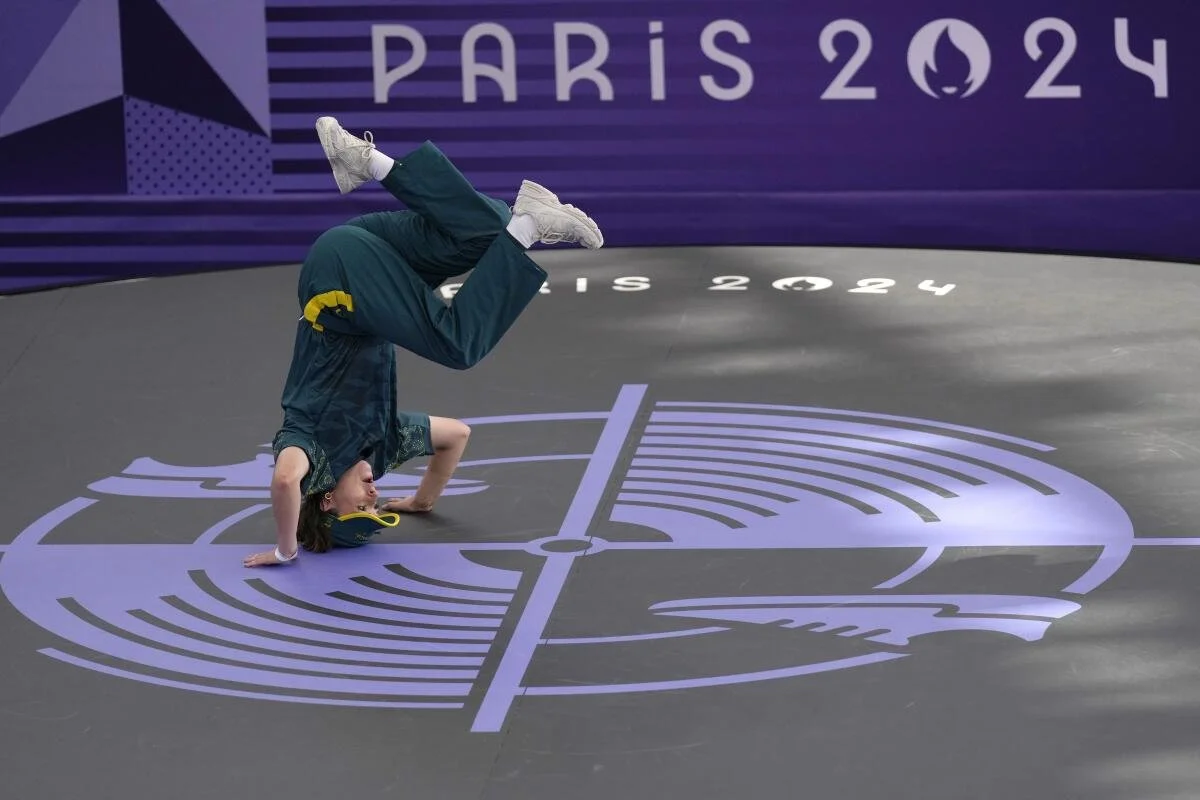
The 14 year olds have a point. But the question is colder than that.
The IOC looks at who governs the sport. How many countries take part? Are the rules consistent? Is there a credible international federation? Are there national bodies? Is the competition fair? Can the public understand it quickly? Can it be broadcast? Is it inclusive? Is it clean? Is it protected from manipulation? Is it attractive to young people? Does it have a story the world can grasp in thirty seconds?
That is where the sporting argument for RC racing gets interesting.
At international level, RC racing already has structure. There are World Championships. There are continental federations and national associations. There are global technical rules, approved equipment, scrutineering, classes, calendars and titles that mean a great deal to the people who compete for them.
At club, regional and national level, the same is true. There are race directors, technical checks, tyre allocations, qualifying formats, finals, points systems, conduct standards and penalties. Sweden places RC racing inside its national automobile sports federation, which sits within the Swedish sports system. In Poland, RC model car racing operates as a commission within the Polish Automobile Club, with EFRA describing it as having equal standing with other sports commissions. RC isn’t making it up as it goes along. Well, not all the time.
This sport has bones.
BUT Can the Public Understand It?
This is where RC racing struggles.
If you already understand RC, a great touring car race is beautiful. You see the pressure. You see the driver hold a line while the car is moving around. You see the difference between a clean pass and a desperate lunge. You see the advantage of one car being on new tyres when the rest are on second-run tyres. You see the driver who is fast, but you know a mistake is coming. You see the injustice of cheating.
But we also see what happens when RC racing is put in front of a proper crowd.
At events like the now world-famous Milton Keynes Grand Prix, people stop and watch in huge numbers. They are drawn in by the speed, the noise, the novelty and the sheer strangeness of seeing tiny racing cars being driven with such violence and precision. For a few seconds, the sport does not need much explanation. It has movement. It has jeopardy. It has spectacle.
Then the marshals hear the same question coming from the crowd all day long.
Mum, who’s winning?
To the audience, it can look like chaos with lap times. And then the time is 21/303.14 and the crowd doesn’t know what it means.
And that is a serious problem if RC racing wants to be understood as a sport.
Every successful racing format gives the audience an anchor. Who is leading? Who is chasing? Who is under pressure? Who needs a mistake? Who is running out of tyres, time or talent?
RC racing has all that. We just keep it to ourselves.
If RC racing ever wanted to make an Olympic-style argument, this would be one of the first problems to solve. Not speed. Not skill. Not even technology. Readability.
The skill has to be explained. The jeopardy has to be clear. The format has to be simple enough to follow. The pictures have to work. The timing has to tell a story. The commentary has to do more than name the leader every twenty seconds and point out it’s the orange car hitting the back straight.
The issue is not that people won’t watch RC racing.
It is that we do not always help them understand what they are watching.
The Shell Argument Comes Back
And this is where the shell argument comes back through the side door.
If RC touring car racing wants to be seen as model car racing, then recognisable bodies matter. They connect the sport to real cars. They make the racing immediately legible. A newcomer can look at a grid and understand the idea: small touring cars racing like big touring cars.
If RC touring car racing wants to be seen as an electric motorsport discipline, then the modern aero bodies make total sense. They are not replicas of anything. They are performance parts. They are what happens when a motorsport innovates. Have you seen a MotoGP bike lately?
Neither side of the shell argument is stupid.
The scale-realism argument is really about identity.
The performance argument is really about evolution.
The sport is caught between them because both are part of its DNA.
That is why the Avalon Vortex debate is so heated. It is not just about what the car looks like. It is about whether we are comfortable with what the car has become.
Modern touring cars are not scale touring cars anymore, and nor have they been for ages. They are electric racing prototype cars, shaped by regulation, aero, tyres, electronics and relentless competitive pressure. We can like that or dislike it, but pretending otherwise doesn’t change it.
That does not mean every class should chase the same direction. Quite the opposite. There is a strong case for different expressions of the sport, demonstrated by the popularity of Tamiya racing with scale shells. Scale-looking classes have a role. Beginner-friendly classes have a role. Stock racing has a role. Modified has a role. Club racing has a role. National and international competition has a role.
The problem starts when we use one identity to judge every version of the sport.
Small Cars, Bigger Sport
That is where the “toy cars” story hurts RC.
A young person trying RC racing for the first time does not experience it as a joke, or as playing with toys. They experience challenge, failure, focus, adjustment, improvement and joy. A parent watching their child learn to control a car at speed sees confidence growing in real time. A teacher watching students change setup and test the result sees engineering thinking appearing in the wild. A racer standing on the rostrum for an A-final feels pressure in their hands, chest and throat.
Ask Bruno Coelho if this is playing with toys. When he won his third touring car world championship, his reaction showed exactly what RC racing can mean at the highest level.
That is not nothing. That is sport.
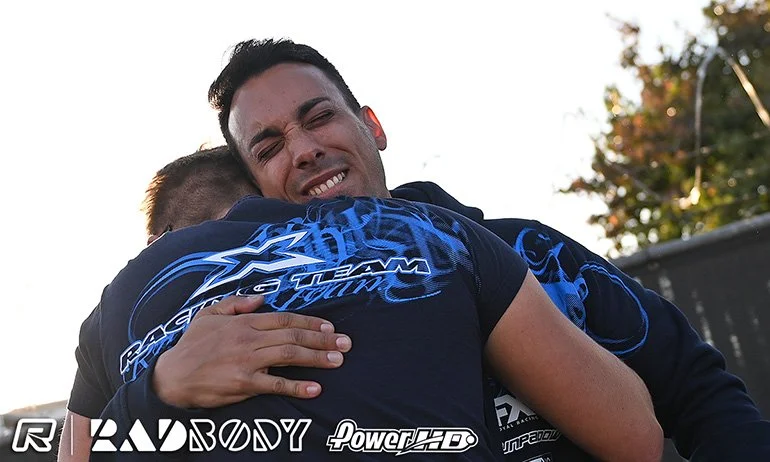
“…people cannot really understand how much we put into it, how much these moments mean for all the team and all the people at home supporting. That we miss so many days at home working hard to make this happen” — Bruno Coelho 3x TC World Champion
And it is why the Olympic question, while slightly grand, is also worthwhile.
There is a famous quote, from science fiction writer Philip K. Dick: “Reality is that which, when you stop believing in it, doesn’t go away.”
The strange thing is not that outsiders sometimes fail to see RC as a sport. It is that we fail to say it clearly enough ourselves. We hide behind “toy cars” because it is funny, because it keeps us grounded, because it punctures ego. It reminds us not to become unbearable. And frankly, some of us need that.
Fair enough. But self-deprecation has a limit.
So, could RC ever be an Olympic sport? Not likely any time soon.
But we say it should be — and the Avalon Vortex Gen2 will likely be at the front.
Touring cars are dead.
Long live touring cars.
Footnote: Yes, Philip K. Dick also said reality is just a point of view, which appears to make this quote argue with itself. But that is quite Philip K. Dick, really. Maybe both things can be true. Will Storr argues in The Science of Storytelling that human beings understand reality through the stories we tell ourselves about who we are, what matters, and how the world works. From one story, RC racing looks like toy cars. From another, it is motorsport. The point of view changes what people notice. It does not change what is happening on the rostrum, on the track, or in the hands of a driver trying to hold it together for five minutes.
Keywords: avalon vortex, rc touring car, rc touring car racing, brca touring car, electric touring car, 1/10 touring car, rc racing, radio control racing, rc motorsport, touring car bodyshell, rc car bodyshell, scale touring car, modified touring car, stock touring car, IFMAR touring car, Bruno Coelho, RC Vision, King of Clubs, KOC26, RC racing sport, toy cars, motorsport discipline