What We Witnessed at Westminster City Hall — and Why It Matters
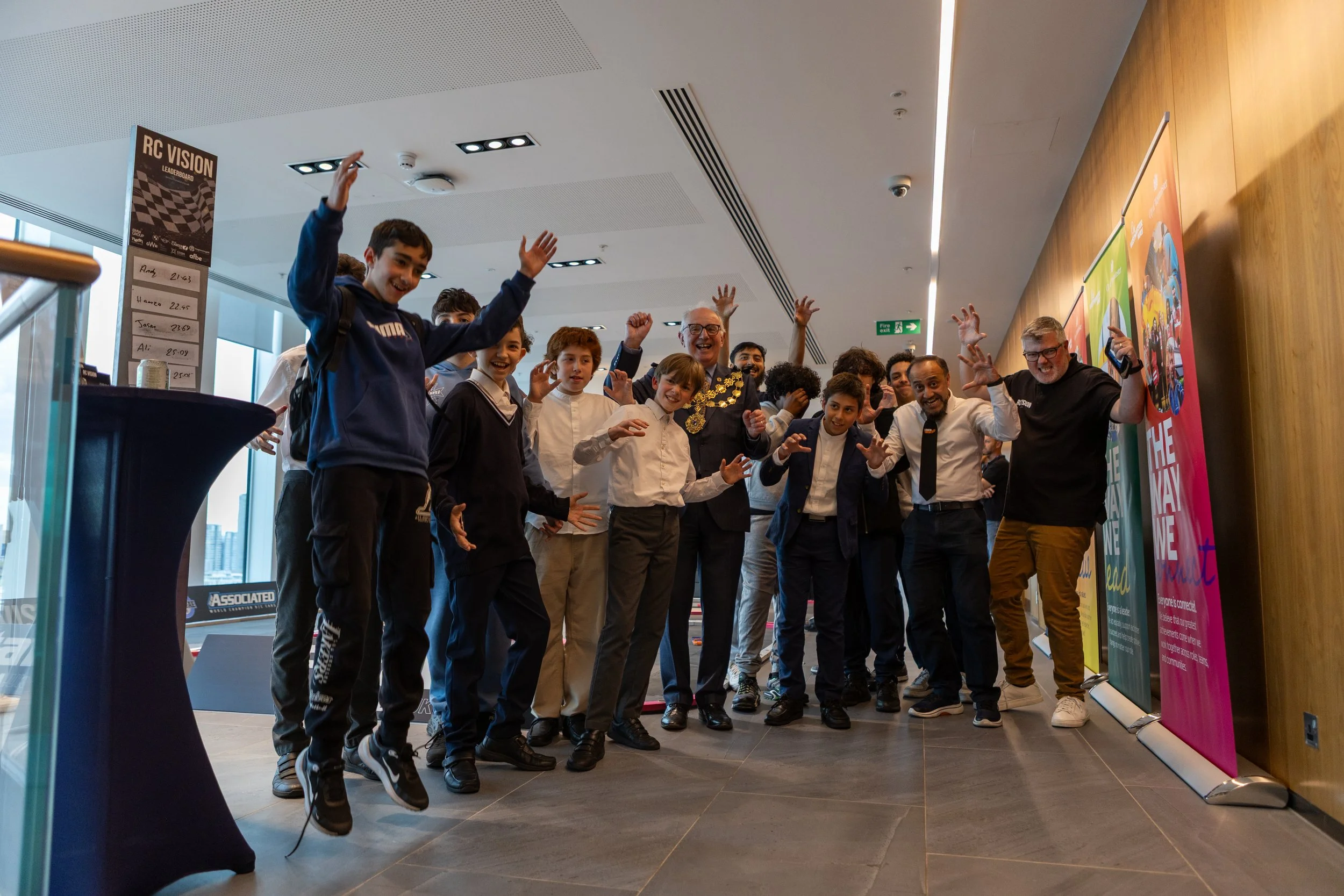
RC Vision at the Lord Mayor's Showcase, 20 April 2026
On Monday evening, something unusual happened inside Westminster City Hall.
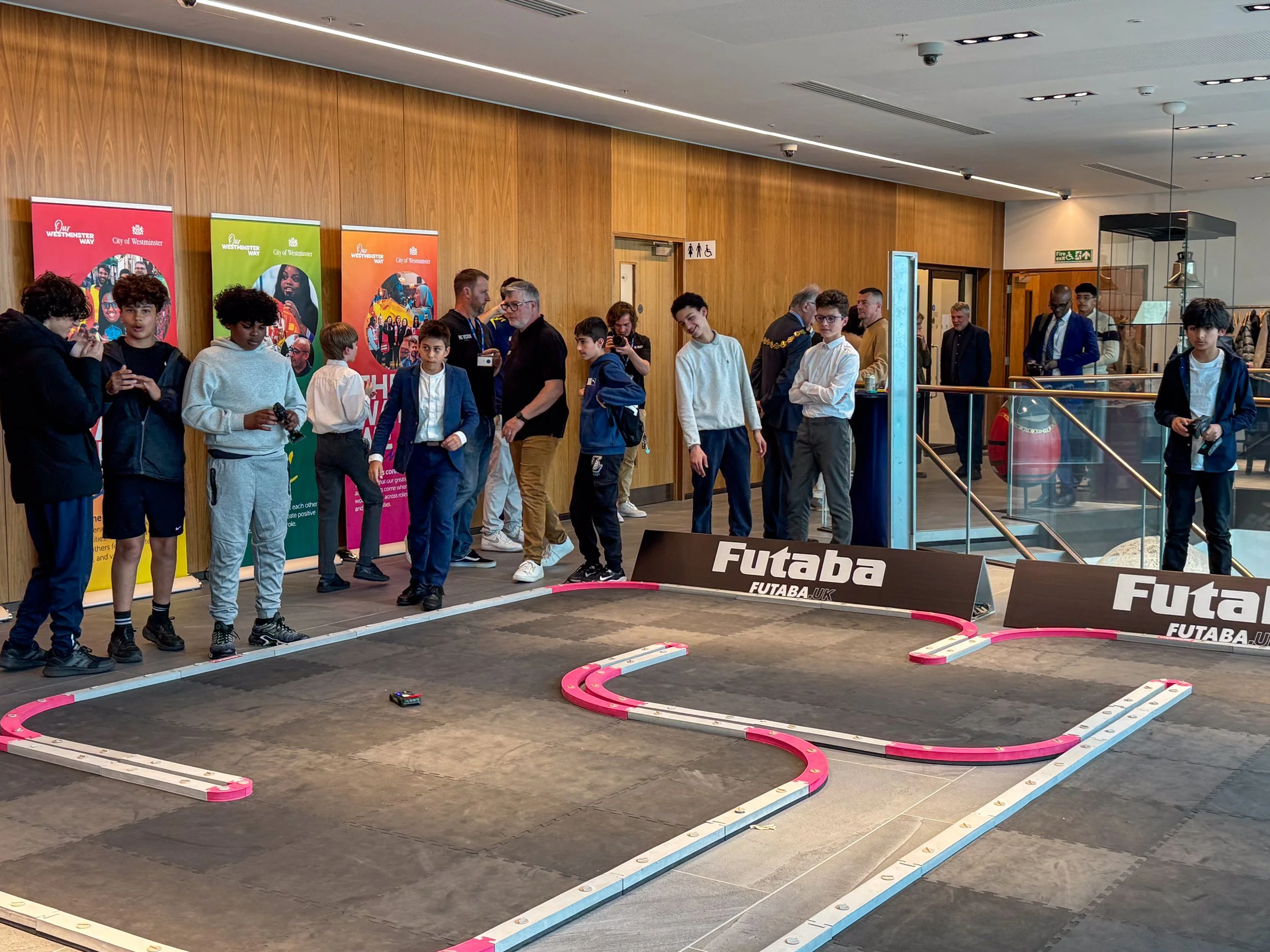
The Lord Mayor's Parlour — a formal civic space on Victoria Street, the kind of room where policy gets shaped and grants get decided — was taken over by radio-controlled cars. A live racing circuit ran through the building. A rock-crawler course sat alongside programme displays. And a group of young people from Westminster stood up and told a room full of city leaders, funders, educators and employers exactly what they had learned, what they had felt, and where they were now heading.
The Right Worshipful The Lord Mayor of Westminster, Cllr Paul Dimoldenberg, had invited the room to witness the work of RC Vision. What they witnessed — and what we discussed together — points to something far bigger than motorsport.
The Room Read the Data. Then the Young People Spoke.
We have spent the last year working with a body of evidence that is, frankly, difficult to sit with. The 2025 Youth Voice Census finds that 83% of young people are experiencing moderate-to-high stress about their futures. More than half — 53% — are afraid that AI will displace them from the workforce before they've even entered it.
But the most telling signal in the data isn't the anxiety. It's what researchers are calling the "Rise of Meh." Nearly half of young people now rate their happiness in the middle ranges — not low enough to trigger a crisis response, not high enough to feel like momentum. A state of quiet, managed attrition. Expectations managed down. Dreams quietly shelved.
That's the data. Then the young people in the room at City Hall spoke. And what they described — the shift from passive to active, from observer to engineer, from uncertain to curious — was the living counterargument to every one of those statistics.
One student, Mehgun, described her mindset moving from "uncertain to curious" once she realised her technical strengths were broader than her academic grades had ever shown her. That reframe — from external benchmark to personal agency — is not a small thing. It is, we would argue, the whole thing.
Why 'Inspiring' Young People Into STEM Often Makes Things Worse
A central theme of the evening's discussion was what we might diplomatically call the failure of conventional STEM engagement. For years, the playbook has been to parade role models before young people — elite engineers, scientists, astronauts — and hope that inspiration takes root. The research is now quite clear that for the students we most need to reach, this strategy is actively counter-productive.
The theory of "self-concept as gatekeeper" explains why. A student who doesn't already see themselves as "a science person" doesn't look at a genius in a lab coat and feel invited. They feel confirmed in their exclusion. The message received is: this field is for people like them, not people like me. High-competence superstar role models widen the gap they are meant to close.
The lock is not the difficulty of the subject matter. The lock is the student's internal identity. And the only key that works is mastery — direct, visible, felt-in-the-hands evidence that you can do this. When a student adjusts a car's suspension geometry to shave a second off a lap time, they are not watching someone else's technical agency from a distance. They are experiencing their own.
This matters urgently because the window is narrow. The longitudinal ASPIRES 2 study suggests that a young person's sense of "fit" within the technical world is largely crystallised by age 14. If they don't feel a sense of belonging in early secondary school, the gate closes. By the time sixth form outreach programmes and university open days arrive, the self-concept has set like concrete. The superstars can't even get in.
What the City Hall audience saw that evening were young people whose self-concept had been cracked open — not by someone telling them engineering was important, but by the grease, the failure, the iteration, and the moment when the car they had built actually worked.
The 'Dirty Skills' Paradox: What AI Can't Touch
Among the funders and business leaders in the room, the conversation kept returning to AI — as it does everywhere right now. But the framing we brought to that conversation is one that tends to surprise people.
The intuitive assumption is that "digital skills" are the answer to AI disruption. Teach children to code, to work with data, to be digitally literate. The evidence says something more complex and, in some ways, more provocative.
The 2024 OECD synthesis data on skills demand in AI-heavy firms tells a counterintuitive story. Digital and cognitive tasks — routine data analysis, standard clerical work, pattern-matching — are declining in demand precisely because AI performs them well and cheaply. Management and administrative tasks are following the same curve. The only category showing a positive trend? Production, repair and maintenance. The physical. The embodied. The "dirty." A 2025 OECD follow-up found that training supply is already struggling to keep pace with those shifts.
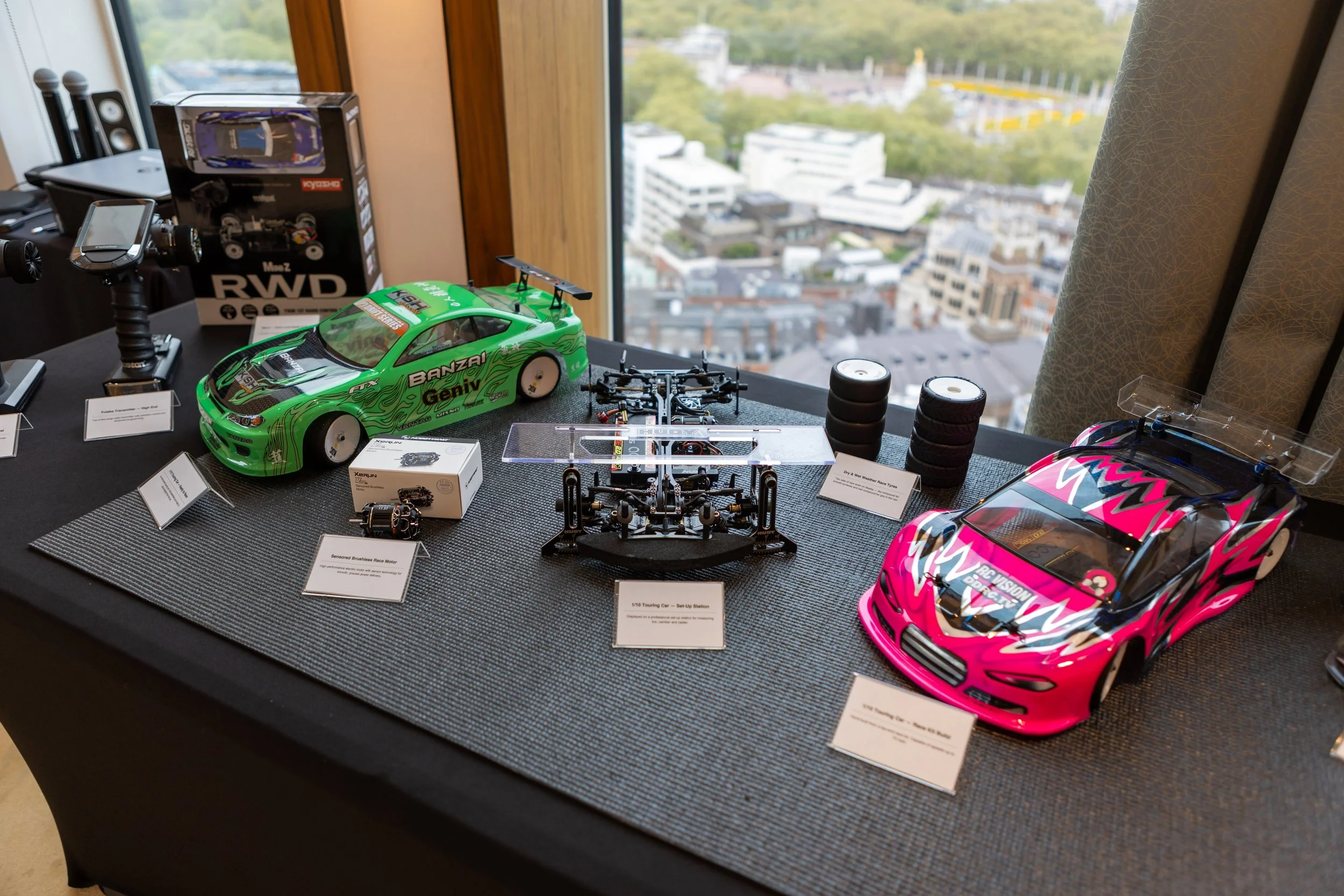
AI can process data. It cannot yet feel a drivetrain that isn't quite right, diagnose a mechanical hitch from sound and vibration, or adapt in real time to track conditions that no clean dataset predicted. The 1:10 scale electric motor — the kind our students strip, rebuild, tune and race — is not a charming analogy for the modern economy. It is, in a very direct sense, a rehearsal for the skills the economy is going to need most.
The discussion at City Hall was candid about this. Several of the employers in the room acknowledged they are already struggling to find young people with physical problem-solving confidence — people who can tolerate ambiguity, work with incomplete information, and troubleshoot systems with their hands and their judgment rather than just their devices.
Engineering as a Habit of Mind, Not a Subject
What RC Vision teaches is not, at its core, about cars. What we build — what the young people at City Hall demonstrated — is what researchers call the Engineering Habit of Mind.
This is not a set of skills you list on a CV. It is a cognitive orientation: how you approach a system you don't understand, how you respond to failure, how you think about the gap between where something is and where you need it to be. It includes systems thinking — understanding how individual variables interact across a whole. It includes iterative design — treating failure as data, not defeat. It includes physical intuition, creative constraint, and real-time adaptation to unpredictable conditions.
These habits are, in the bluntest possible terms, what automation cannot replicate. Not because machines aren't capable of processing the same information, but because these habits emerge from embodied experience — from the feedback loop between a human body, a physical system, and real-world consequences. You don't acquire them from a screen. You acquire them from getting it wrong in a way that matters, and working out why.
The students who spoke at City Hall were not describing academic achievement. They were describing a changed relationship with their own capability. That is a different and more durable thing.
What the Evening Also Surfaced: The Barriers We Can't Solve Alone
The conversations at City Hall were not only optimistic. They shouldn't have been.
The same research that shows young people's confidence in teamwork (64%) and creativity (60%) rising also shows the physical infrastructure connecting them to opportunity breaking down. Forty-five per cent of young people cite transport as the second biggest barrier to work and opportunity. One student's account, cited in our research, captures the situation plainly: "If my car were to break down, I would have to commute four hours on a bus for a thirty-minute drive... I still wouldn't get to work on time."
And for the first time in the Youth Voice Census data, crime and violence — not the economy — is the top national concern among young people. Forty-three per cent cite safety as a barrier. When a young person is genuinely afraid to walk home, their skills portfolio becomes beside the point.
We raised this directly because the people in that room have influence over the decisions that shape those conditions. A strong CV and a well-developed engineering mindset are necessary. They are not sufficient if the infrastructure of safety, access and transport doesn't hold.
What We Take From the Evening
The Lord Mayor's Showcase was not a celebration in the sense of a job done. It was a demonstration of a proposition — and a room full of people who, by the end of the evening, had felt it rather than just heard it.
The proposition is this: that the most powerful intervention we can make for young people who are being failed by the current system is not to tell them what engineering is, or why it matters, or who does it. It is to put them inside it — to give them a real problem, a physical system, immediate feedback, and the experience of solving something that didn't want to be solved.
The "meh" — the quiet, managed disappointment that the data is tracking across an entire generation — does not respond to inspiration. It responds to mastery. And mastery, in our experience, responds to a 1:10 scale motor and a track that doesn't forgive mistakes.
That's what we witnessed at Westminster City Hall. That's what we came to discuss. And that, plainly, is why we do this.
RC Vision is a social venture using the culture and engineering of radio-controlled car racing to build STEM identity, resilience and technical confidence among young people who are underrepresented in the field. We work with schools, employers, funders and community partners across Westminster and beyond.
To find out more or to get involved: andy@rcvision.co.uk