The Young People Missing Between the Headlines
Why narrative matters in youth systems change — and why this work matters now
This week, watching young people prepare for Mini Masters, I found myself thinking about three very different stories about young people and opportunity.
One story is about infrastructure and access. More than 1 in 7 young people now live within a 35-minute walk of a newly funded youth centre. Investment is flowing. Provision is expanding. That is real progress, and it deserves recognition.
At the same time, reporting on deep cuts to youth services across England paints a very different picture of provision on the ground — one in which communities are struggling to sustain what was once everyday support for young people.
Both stories are true. But they describe very different realities.
Another story comes from research. Louise Archer’s work through ASPIRES and YESTEM has shown that participation in STEM is shaped less by raw ability and more by identity, belonging and what she calls “science capital” — whether young people see STEM as something that people like them do. National youth employment data echoes this in a different way: many young people report anxiety, declining access to work experience and careers guidance, and uncertainty about how to navigate the labour market. In many schools we work with, this aligns with rising non-attendance and fragile confidence. Young people are there — but not always fully present.
And then there is the third story. The one I see every week. Young people building cars, testing ideas, making mistakes, fixing them, arguing about set-ups, cheering one another on. Some arrive quiet and unsure. Some are convinced engineering “isn’t really for me”. Over time, something shifts.
None of these stories are wrong. But they do not always speak to one another.
Between them sits a large group of young people who rarely feature in headlines. They are not persistently absent enough to trigger intervention. Not high-attaining enough to be profiled as success stories. Not disengaged enough to appear in crisis data. Not exceptional enough to be celebrated. They sit in the quiet middle.
In our work, we talk a lot about the power of informal learning. Not as enrichment, but as the experience of choosing to participate. When a young person chooses to turn up — to race, to build, to try again — something important happens. Choice builds agency. Agency builds belonging. Belonging shapes identity. And identity shapes trajectory.
That is why barriers matter.
When we read that “more than 1 in 7 young people live within a 35-minute walk” of a youth centre, it sounds straightforward. But who decided that 35 minutes is not a barrier?
It certainly wasn’t a young person.
For some, 35 minutes is manageable. For others, it means crossing unfamiliar streets, negotiating with parents, giving up paid work, managing caring responsibilities, or walking alone into a space where they are not yet sure they belong. Access is not binary. A map can show distance; it cannot show friction. And friction is where participation quietly falls away.
This is where narrative becomes powerful.
Tackling equity, social mobility and skills gaps is fundamentally system-change work. And in systems work, narrative is power — because the way we describe progress shapes what we measure, fund and prioritise.
As systems thinkers like Charles Leadbeater and Jennie Winhall argue, what a system chooses to measure and celebrate determines how resources flow and whose experiences count. If we measure coverage, we prioritise reach. If we celebrate apprenticeship numbers, we prioritise entry. If we map cuts, we prioritise restoration.
All of that matters. But it can leave unseen the slower work of building confidence, belonging and capability.
Industry speaks urgently about collaboration, adaptability and problem-solving. Those are the right skills for a world where automation is accelerating and careers are less linear than they once were. But those skills do not appear at the point of recruitment. They are cultivated upstream, in spaces where young people feel safe enough to experiment, fail and improve.
On the ground, trying to build sustainable youth STEM provision, this tension is real. It is easier to count attendance than to measure identity shift. Easier to report geographic spread than to evidence long-term belonging. Yet it is precisely that slower, relational work that determines whether a young person steps forward or opts out quietly.
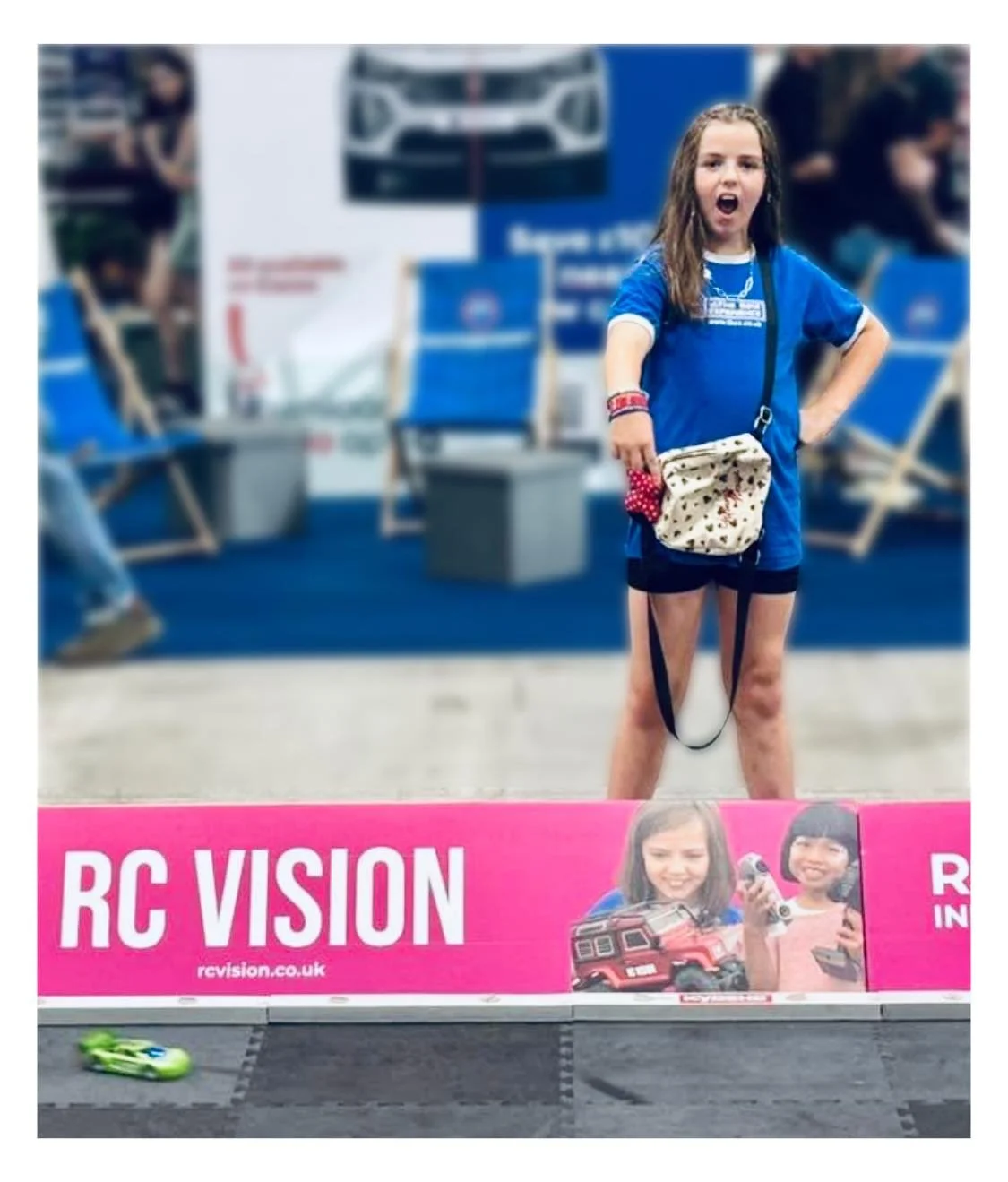
This Saturday, young people will line up to race in our winter series, Mini Masters. Part of a collaborative partnership with BMW Group, bringing RC Vision to the community on OX4.
Manufacturing built Oxford. But the future of manufacturing will not look like its past. Automation is accelerating. Roles are evolving. Career paths are less predictable.
The young in this area of Oxford are growing up in that landscape.
What they need is not a fixed plan. They need the confidence to navigate change. To frame problems. To adapt. To keep learning.
Mini Masters is a race. But it is also practice. Practice in thinking like engineers. Practice in taking responsibility for outcomes. Practice in collaborating, troubleshooting and improving. For some, it may be the first time they feel capable in a technical space. For others, the first time engineering feels imaginable.
That is what travels with them long after the lap times are forgotten.
If we are serious about equity and future skills, then upstream investment must mean more than proximity. It must mean building environments where young people choose to participate — and, in doing so, begin to see themselves differently.
The young people missing between the headlines are not a rounding error. They are the future. And noticing them — designing for them — is where meaningful systems change begins.