Has KOC Run Its Course?
Fewer than 40 racers completed Round 3 of the 2026 King of Clubs Race Series at Eastbourne. There had been more names on the entry list. But withdrawals and no-shows steadily reduced the field, leaving an event that felt noticeably smaller than the KOC meetings of previous seasons.
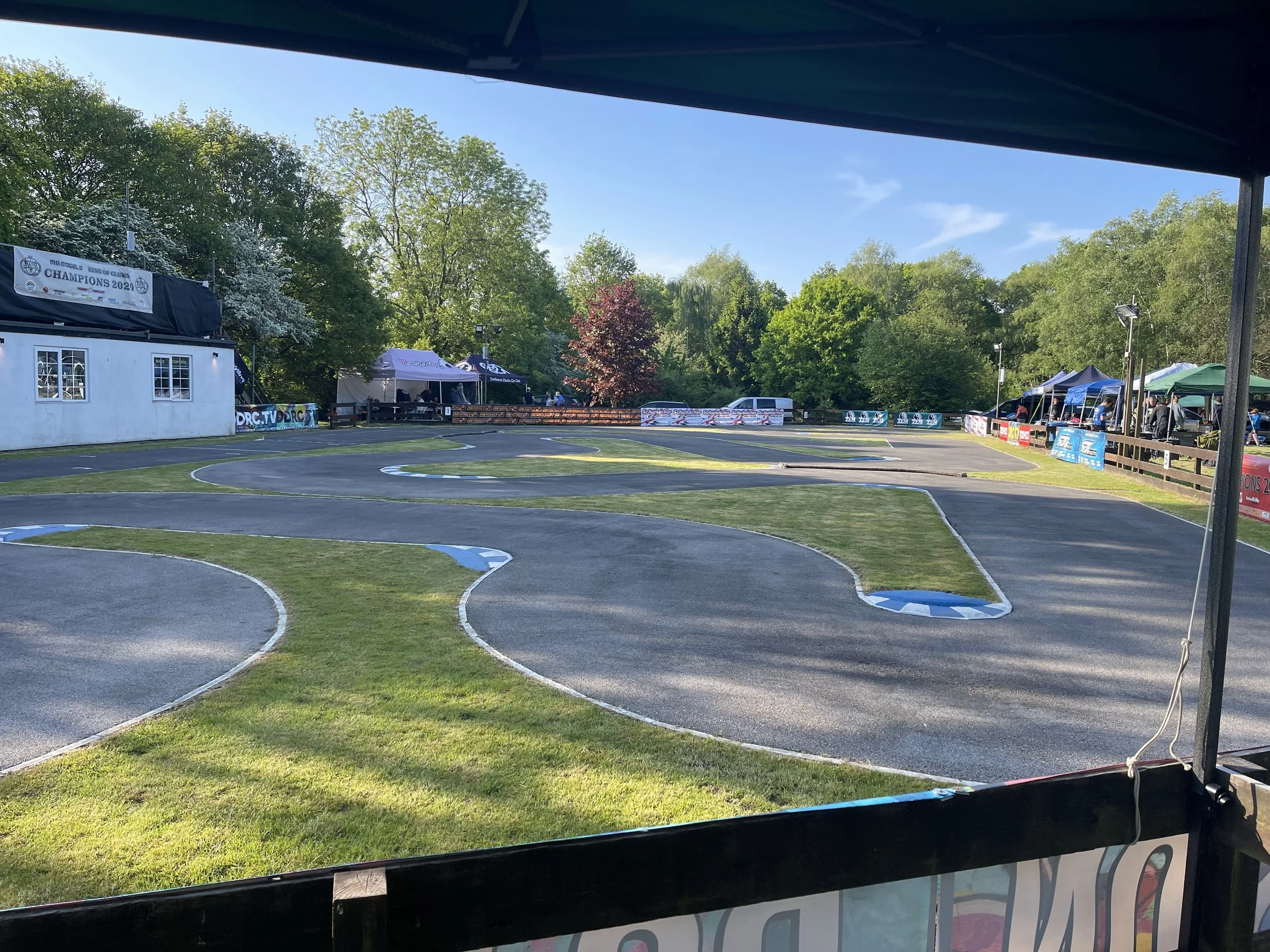
What the entry lacked in quantity, it made up for in quality. There was brilliant emerging young talent. There were established racers operating at an extremely high level. There were close battles throughout the field, championships decided, performances that deserved a much larger audience. On the track, Eastbourne was an excellent KOC meeting. Around the track, the empty spaces were harder to ignore.
So perhaps it's time to ask the uncomfortable question. Has KOC run its course?
To answer that, it helps to go back to why it started at all. The King of Clubs began in 2020 as a collaboration between what became RC Vision and a group of four clubs across the south of England. Its purpose was never simply to add another race series to an already crowded calendar. KOC was meant to bring clubs together, create a positive regional championship, and provide somewhere for different kinds of racers to compete alongside one another — serious racing for the quickest drivers, accessible competition for club racers, dedicated opportunities for children and young people through the Rookies Cup and Talent Cup. The inter-club championship gave racers something bigger than their individual result to chase. For several seasons, it worked.
KOC attracted 144 different racers in 2021 and 163 in 2022. Participation then fell to 112 in 2023, recovered to 129 in 2024, and reached 127 in 2025. Those annual totals disguise what's happening at individual rounds — a racer attending one meeting counts the same as somebody contesting the full championship, so the community KOC touches is larger than a single Eastbourne entry might suggest. Even so, the recent direction of travel is hard to dismiss. Despite considerable work by the founding clubs and RC Vision, the championship in its current form looks increasingly unsustainable. Race meetings carry costs. Clubs commit dates, facilities and volunteers. Organisers commit time to regulations, entries, promotion, timing, trophies, championship administration and the inevitable problem-solving behind the scenes. That effort can be justified when a series creates sufficient participation, energy and value. Below a certain number, the equation starts to change.
The most obvious explanation is that racers have moved on faster than they've been replaced. Over the life of KOC, the regional scene has included drivers like Charlie Colby, Jack Collins, Archie Matthews, Matt Quinlisk, Tim Langdell and Ash Wiffen, alongside many others who raced regularly at clubs and series events — if you stop and think, twenty-plus names spring to mind without trying too hard. Some were young racers developing rapidly. Some were long-standing, experienced competitors. They travelled throughout the region for events and acted as ambassadors in promotion. Many no longer race regularly, or at all.
Each person will have their own reasons. Education, work, relationships, family commitments, changing interests, financial pressure, simple fatigue — few departures can reasonably be blamed on one class, one organiser or one race meeting. People move through hobbies. That has always happened. The problem arrives when the next wave is smaller than the one disappearing through the exit.
KOC has worked hard to build that next wave. The Rookies Cup introduced children to structured racing using simple cars. The Talent Cup offered young drivers a route into proper touring car competition. Families became part of the paddock. Some young racers developed into genuinely impressive competitors — that remains one of the strongest parts of the series. But a small number of exceptional young racers can't, by themselves, replace an entire generation of departing competitors. Recruitment isn't simply about finding future elite drivers. A healthy championship also needs the club racer — the person who enjoys preparing a car during the week, or not, travelling to a meeting on Sunday, and competing somewhere in the middle of the field with some people they call friends. They may never win an A-final but they're the people race meetings are built on.
It would be easy to file all this under a decline in Touring Car itself. Care is needed here, though, because the data doesn't support that. Across the venues and series tracked, the number of different racers stayed broadly stable between 2022 and 2025. Some clubs and series have grown. The EWS has maintained remarkably consistent participation. A new indoor series, Carpet Legends, has thrived. Most successful of all, the Iconic Cup has expanded dramatically, pulling in a largely different audience. There are still plenty of people racing 10th electric on road. The harder truth may be that they're not choosing KOC anymore.
So, while it would be comforting to conclude the championship is down as part of a wider trend, the evidence doesn't seem to support that. The racing market has moved instead. Some racers prefer local and low cost club meetings. Some concentrate on testing to be competitive at national events. Some want indoor racing. Some are drawn to retro cars and nostalgia. Some prefer fewer events, closer to home, with lower costs and less commitment. Some might not like changes or classes that aren’t exactly what they want. And every event is competing not only against other events but against the rising cost of living and the growing appeal of racing occasionally, selectively, locally. KOC once occupied a clear space, offering decent regional competition, several local venues and a community identity of its own. The question now is whether enough racers still want that particular flavour of coffee.
When participation falls, we naturally go looking for the reason. Are the cars too fast? Are tyres too expensive? Too many classes, or not enough? Is the racing too serious, or not serious enough? Are the venues too far apart, the calendar too crowded? Every theory attracts support on the grapevine of paddock chatter, and most contain at least a fragment of truth. But correlation isn't cause. A racer may stop attending at the same time a regulation changes without having left because of it. Someone may complain loudly about tyres and then miss the next event because of a family holiday. Another may praise the series and still decide the number of Sundays away each summer is more than they want to commit. Participation is built from hundreds of individual decisions, and it may not be possible to reverse those decisions with tweaks to the rulebook. Changing classes, tyres, motors or formats without understanding the problem can create fresh disruption while leaving the underlying issue untouched — you don't have to look far beyond the FWD class numbers to see that playing out in real time.
There is another possibility, and it's worth sitting with. Perhaps there's no issue, no fatal mistake, no hidden lesson. Perhaps KOC was the right championship for a particular group of racers at a particular moment. It arrived when the founding clubs wanted to collaborate. It created memorable races and fierce but fun inter-club battles. It gave young racers a stage. It led to the creation of some simple newcomer classes at a few of the host clubs. It brought people together who might otherwise never have shared the same paddock. Series don't have to exist forever to have succeeded. Motorsport in general tends to treat continuation as the only proof of value — if it survives, it must be healthy; if it ends, it must have failed. That's a distortion.
A championship can make a meaningful contribution and still reach the end of its natural life. The mistake wouldn't necessarily be ending it. The mistake might be continuing indefinitely through habit, consuming energy without creating value in return. Which is why the question needs asking honestly: where should limited time, money and energy be invested next?
Whatever happens to the present format, there are parts of KOC that shouldn't be discarded casually. The Rookies Cup and Talent Cup have shown that children and young people can be brought into real competition when the equipment, environment and expectations are built around them. The idea that kids racing against kids increases enjoyment and development isn't proven beyond doubt — but it's hard not to believe it having seen the progress of the racers. The inter-club championship has created identity and friendly rivalry between clubs that's been healthy and fun. The best KOC meetings have delivered exactly what regional racing should offer: high standards without the severity of a national championship, serious competition without losing the pleasure of spending a day racing with friends.
Eastbourne demonstrated that again. Tim Hancock's clean sweep in 17.5 Touring brought the destiny of the championship into question. Ivan Murphy-Brown bounced back in the Rookies. Jay Westwood, James Snashall and Daniel Saunders completed dominant title campaigns. Across the classes, racers fought for every position on an immaculately presented circuit under bright summer skies. It didn't feel like a dying series. It felt like an excellent race meeting that only a few people had chosen to attend.
One round remains. The final KOC26 round takes place at West London in 3 weeks — titles still to settle, races still to be won, one more chance to show the series at its best. After that, there needs to be an honest conversation. Is there still demand for a multi-round regional championship? Should the successful parts be folded into club meetings, or another championship? Or has the moment come to thank everyone who built it, acknowledge what it achieved, and let something new take its place?
There may be a reinvention waiting. There may be a simpler, stronger version of KOC hidden inside the current series. And there may be no shame in deciding that six years of races, rivalries, young talent and shared memories add up to a job worth doing — and a job well done.
The numbers in 2026 have asked the question. Now the racers, clubs and organisers have to answer it.
See you trackside at WLRC